
Must-Have Tools for Emergency Preparedness in 2025
Key Highlights
-
Being ready for emergencies in 2025 means that people must keep up with changes in weather and know about risks between countries.
-
Putting together a family emergency kit is key. A good emergency kit helps the family stay safe if something goes wrong.
-
These days, survival gear is a big deal. Gear like portable power stations and special tools is something all people need.
-
Using technology helps immensely. Apps and online resources can make your response better and help you talk to others.
-
You should trust official government organization sites for info. Secure websites that end in .gov are best to use and give good emergency kit checklists.
-
Safety at work and following rules mean having emergency plans that are clear for all people at your job.
Introduction
Welcome to your easy guide for emergency preparedness in 2025. The world is always changing, and we have to get ready for new emergencies. The weather can be unpredictable, and there may be new global problems. Being ready is important for your financial stability and your family's safety. In the United States, planning ahead helps you deal with what comes your way. This guide tells you how to make a modern emergency kit and a good plan, so you can feel ready for the future.
Understanding Modern Emergency Preparedness Needs in 2025
The way people get ready for hard times has changed. In 2025, you need more than just some food and water for a few days. There are new and tricky problems to deal with now. The global economy can change fast, and new risks can make life tough for advanced economies and affect their economic growth.
Understanding these modern risks is the first thing you need to do to get ready in a smart way. You have to look at things like changing weather and how steady our critical infrastructure is. We will look at how these things can change your plan for staying prepared and talk about why it's more important now to have the right tools.
How Changing Weather Patterns and Geopolitical Risks Shape Preparedness Plans
The world today is changing and there are many things that you can't always guess will happen. The weather can be harder to plan for, and wildfires are now seen in many places. You have to be ready to leave quickly or deal with problems that last a long time. When you learn about these weather changes, you can know which disasters like wildfires to look out for where you live.
Geopolitical risks are now a part of our everyday life. The conflict in Ukraine is one example. It shows how fast the global economy can get hit. Because of this, supply chain problems have come up and prices for basic things have gone up. The events in Europe and in other places make food and fuel harder to get.
This new way of life shows that your plan for being ready needs to be stronger. It's not good now to just plan for a storm in your area. You also need to think about how big events around the world can change what you get or need, and what you use. Being able to depend on yourself and your own supplies is now very important.
Why Incorporating Tech Tools and Survival Gear Is More Critical Than Ever
As the world gets more digital, there are new risks. Cyberattacks are getting stronger, and they can hit important things like power systems and phone networks. Geopolitical risks sometimes play a role in these attacks. The attacks may be used as part of a conflict and this can hurt everyone, even in advanced economies. An official government organization can become a target and so can the services that people use every day.
This is the time when new technology and survival gear are really needed. A dependable power supply that works off the grid can help you stay connected. It makes sure the devices you need keep working even if the main power goes out. Simple survival gear gives you what you need for warmth, shelter, and safety, no matter what is happening around you.
Just having old emergency supplies will not be enough now. You need to add technology to your plan. It helps you stay up-to-date and safe. Having the right survival gear gives you the freedom to handle a crisis with confidence.
Building a Comprehensive Preparedness Plan for Families and Workplaces
A good plan helps you and your family get ready for anything. It is not just about gathering supplies. You need to make a simple strategy that everyone at home can use if there is an emergency. Make sure your plan talks about several things, like how and where to evacuate and how to talk to each other if you are not together.
It’s best to make a plan for the place where you work. When you do this, people will know what to do in case something goes wrong. They will also know how to find your family emergency kit and where to keep copies of sensitive information safe. Next, we will talk about the most important things to help you get ready for an emergency, and the mistakes people often make that you should not make.
Key Steps to Effective Prepping for Natural Disasters and Emergencies
Making a good plan can be simple. The first thing to do is sit down with your family and talk about what you will do in different emergencies. Think about where the family will meet if anyone gets separated. Decide who the out-of-state contact will be. If you answer these questions now, you will save time when something happens.
Next, make your emergency kit. This is not just a box of stuff. It should be ready for you to grab quickly if you need it. Your kit must have the things you need to live for a few days on your own. It should include important items like an emergency kit, a first aid kit, food, and water.
Practice your plan. It’s good to have your evacuation route written down, but it’s better if everyone gets up and walks through it. When you practice, people can remember what to do in case of an emergency. A solid plan includes:
-
Put together a complete emergency kit and use a checklist to make sure you do not miss anything.
-
Make a plan so your family knows how to get in touch with each other.
-
Find out which evacuation routes to use and where nearby shelters are.
-
Check your plan and emergency kit often. Keep them up-to-date.
Avoiding Common Mistakes When Creating Your Emergency Kit
When you make your emergency kit, it is common to miss a few things. One mistake is to pack the kit and then not look at it for a long time. You need to check your kit often. Food, water, and medicines can go bad or run out. A checklist can help you remember to look at dates and replace what you need.
Another mistake is to not make your kit feel right for you. Every family is not the same. The kit should fit what you need. Look at your family members, like if you have pets, small children, or older people in your home. Make sure you put in things for them. You might need pet food, diapers, or medicine they have to take. Do not only get the basic items. Think about what your family needs and pack those.
Finally, it is important that you get ready for events in different places. You might be at home, at work, or the car when something bad happens. Make small kits for your car and work. This way, you will always have food and supplies to use, no matter where you go. Watch out for these common mistakes to avoid:
-
People sometimes forget to update their kit every year. This is important, so be sure to make changes as needed.
-
You have to pack enough water. A good rule is one gallon for each person, each day.
-
Many people do not think about their own needs. Remember to add things like medicine or baby items.
-
The kit should not be just at home. It is good to have a kit in other places as well.
Essential Survival Gear and Tools Everyone Should Have
Having enough food and water is very important in an emergency. You also need the right survival gear. These things help you deal with tough situations. For example, they help you find your way when GPS is not working. They also help you keep warm when there is no heating. All of this makes the time a little easier for you and your family.
Essential gear is made up of things that help you stay safe, warm, and able to call for help. A good firestarter, insulated camping pad, and a basic compass are some of these tools. This gear does not need electricity, and it can save your life if you need it. Now, let’s see which products can help you be ready for anything.
EcoFlow Portable Power Stations—A Must for Reliable Energy
In the United States, when the power goes out, it can feel like everything stops. You may not be able to talk to people, save your food, or even light up your home. This is why having a good and easy-to-carry power source is so important these days. It is not just something nice to have. It is something we all need to be ready for emergencies.
EcoFlow Portable Power Stations are a good way to get power when you need it. The devices work like big batteries that you can charge up. You can use them to make phones, laptops, or even a small fridge or a medical device work. These are different than old gas generators. They do not make noise, have no bad fumes, and they are safe for you to use in your house. You get clean energy with these power stations.
Getting an EcoFlow station can help you keep the devices you use every day charged up. You will be able to stay up-to-date with the news, and feel like things are normal even in tough times. This is one item that you should have at the top of your list when you make your emergency plan for 2025.
Top Products from Dead End Survival: Firestarter, Camping Pad, Compass & Emergency Tent
When new things do not work, older ways to stay safe become very important. Dead End Survival gives you tools that you can trust for tough times. You get things like a firestarter, camping pad, compass, and an emergency tent from them. These things help you stay warm, find shelter, and know where to go.
The Survival Spark firestarter uses magnesium to help you start a fire, even if it is wet outside. You can use it to stay warm, cook food, or call for help. An insulated camping pad keeps you off the cold ground at night. This helps you keep your body heat while you sleep. A basic compass is important for finding your way if your GPS does not work. An emergency tent gives you quick, light shelter from wind and rain.
These tools are small, strong, and simple to use. They fit well in any emergency kit. You can count on them to help when you need it most.
|
Product |
Purpose |
|---|---|
|
Creates sparks for fire in any weather condition. |
|
|
Provides thermal insulation and comfort for sleeping. |
|
|
Allows for accurate navigation without relying on technology. |
|
|
Offers compact, lightweight shelter from wind and rain. |
Leveraging Technology for Smarter Emergency Preparedness
Technology can help you a lot in an emergency. We have talked about what to do if the power goes out. It is also key to use digital tools, both before things go wrong and while a crisis is happening. Today, modern apps and online tools can give you up-to-date information. These can also make planning easier and better for everyone.
Adding technology to your emergency plan helps you keep up with what’s happening and talk to others better. You can get weather alerts and save important papers online. These tools make it easier to act fast. Let’s look at the tech you need in your kit and show how digital tools can make you more ready for anything.
Must-Have Tech Tools for 2025 Emergency Kits
Your emergency kit should include digital items as well as physical ones. It is good to start by getting your smartphone ready with key apps that work without internet. The best apps to have are first-aid guides, maps of your area that you have already downloaded, and emergency alert apps from trusted sources. Your emergency kit is not complete without these tools on your phone.
It's smart to keep digital copies of your important papers. Use a scanner to put your ID, your insurance, and deeds into your computer. Then, save these to a cloud that is safe for you. You should also keep some locked files on a USB stick in your emergency kit, just in case. Be sure the websites you use are secure and show "https" before putting any sensitive information on them or when checking them later.
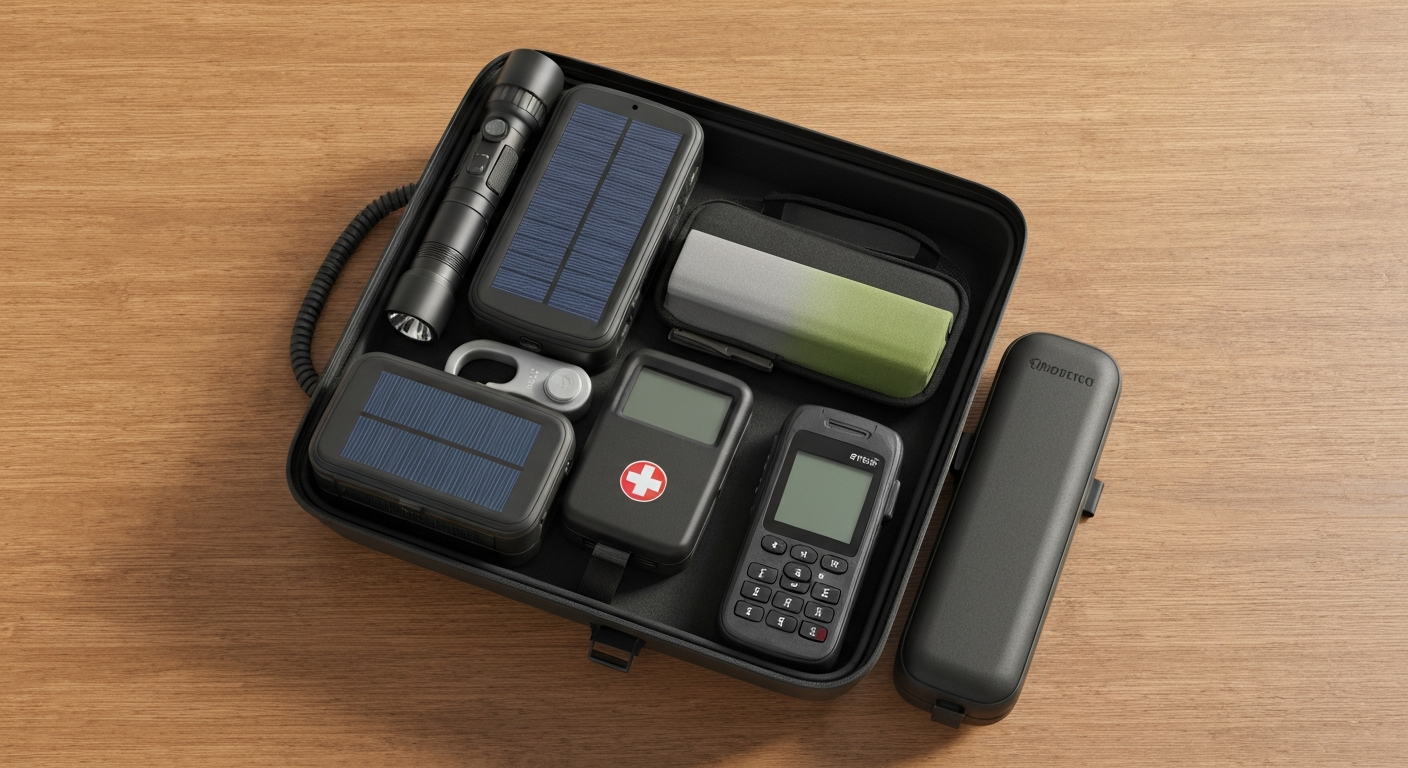
Finally, portable power is very important. Your devices will not help you if their battery is dead. A good power bank or a bigger portable charger will help you keep your things charged. Key tech tools to include are:
-
Get a NOAA Weather Radio or use a smartphone app to have alerts.
-
Use offline maps and a compass app when you need directions.
-
Keep important documents in cloud storage to have them safe.
-
A high-capacity power bank and a solar charger help you keep devices powered.
How Apps and Digital Resources Improve Response and Communication
During an emergency, you must have fast and easy ways to talk and get information. The right apps and online tools are made for this. Apps from FEMA and the American Red Cross send real-time alerts when there is a disaster near you. This helps you get time to do what you need to stay safe.
These digital resources help you keep in touch with people you care about. Many of them have a safety check-in feature, so you can let your family and friends know you are safe. You can make a digital list with emergency contact information. This list is easy to share, so everyone will know who to call.
These apps do more than just send alerts and messages. They often have important life-saving info. You can get easy steps for CPR. There are guides for shutting off the home's utilities. The apps also give lists of emergency shelters close to you. Having all this ready to use can help you feel sure and able when you need to act.
Staying Informed: Weather Monitoring and Government Resources
Knowing what the weather will be like can really help. The best way to stay safe is to keep up with real weather news and check government sites. A lot of wrong info can get out fast when things go bad, so you should always trust the right sources.
An official government organization website (a gov website) is the best place to get correct and current news. You will find information that is true and is updated often. These sites have tools and details for everyone, such as weather alerts that show changes as they happen and easy guides to help you get ready. Next, we will talk about ways to watch weather changes and how to find the top government resources for you.
How to Track Weather Patterns and Alerts in Real Time
Effective weather monitoring is important, and you need to use more than one source to get all the facts. A NOAA Weather Radio should be the first tool you use. This radio gives you nonstop weather updates right from the National Weather Service. It will warn you about any danger from storms, even if your power goes out.
Along with a radio, you can use smartphone apps for real-time alerts. Many local news stations have apps that send push notifications when there is severe weather. You can also follow official social media accounts from your local emergency management group and the National Weather Service.
Going to a gov website like weather.gov lets you see the latest weather forecasts. You can check radar maps and read official alerts. When you follow these updates, you can know sooner if you should stay at home or leave. This gives you and your family more time to get ready and act.
Best U.S. Government Resources for Up-to-Date Emergency Information
The United States has a gov website to help everyone get ready for emergencies. Ready.gov is the main place for this. It brings together all you need to start planning. On the site, you will find easy-to-follow guides, checklists, and planning templates. These are free for families, businesses, and even for pets. This website makes it simple for people in the United States to get prepared for any situation.
This gov website gives you clear lists for making your emergency kit. It tells you what to do in different disasters. The site also helps you set up a family communication plan. You can feel sure that what you read is right because experts in emergency management check the info.
Another main resource is the Federal Emergency Management Agency (FEMA). The FEMA app gives real-time weather alerts. It sends out safety tips and shows you where to find open emergency shelters near you. When you use these official resources, you know you are getting good and trusted information. Key resources include:
-
You can visit Ready.gov if you want planning guides that cover many things.
-
The FEMA app gives you alerts right away and shows where shelters are.
-
Go to Weather.gov to get updates and forecasts straight from the National Weather Service.
-
Check your local emergency management agency's website for info that is about your area.
Importance of Emergency Preparedness in Healthcare and Work Environments
Being ready is not only important for homes. The workplace also needs to have safety plans in place. Companies and healthcare workers need to keep everyone safe during emergencies. A clear plan helps make sure the work can keep going. It also helps follow the rules put in place.
For any group or company, it is good to plan for emergencies. A solid emergency plan helps to lower trouble and danger. The plan can cover different things like practice runs for evacuation, keeping safe files, and protecting the building or computers. Next, we will look at certain steps that medical places need. We will also talk about tips for keeping the work area safe when faced with a bad event.
What the CMS Emergency Preparedness Rule Means for Healthcare Facilities
The Centers for Medicare & Medicaid Services (CMS) Emergency Preparedness Rule gives the same standard for healthcare places across the country. There rule asks hospitals and long-term care homes to write out clear plans to keep working well during emergencies. The focus is to make sure patients stay safe and get good care without breaks.
Facilities need to do a risk check under this rule. They have to find what could go wrong and make plans to deal with it. This means they should figure out how to keep talking with people, manage their things, and keep safe both sensitive information and patient records. This rule helps make sure that in a disaster, the place can still give care.
For healthcare providers, following the rules is more than that. It is about being ready to help people at the time they need it most. The CMS Emergency Preparedness Rule makes this clear. It sets up a plan so there will always be a good level of readiness all over the healthcare system.
Ensuring Workplace Safety and Compliance During Emergencies
Every business in the private sector must put workplace safety first. You need to have a strong emergency plan. This keeps your employees safe and helps your business get back to normal faster after something bad happens. A plan which covers everything needs to be easy to read and simple to find. It should also be practiced often by all.
First, find out what types of emergencies may happen at the workplace. These can be things like fires, bad weather, or when the power goes out. Make sure there are simple evacuation steps that all people can follow. Pick spots where everyone can meet outside and stay safe. Keep an emergency kit at the office. This kit should have a first-aid kit, water, and food that does not go bad.
Regular practice and drills at work help everyone follow the rules and know their part. When people are ready for what may happen, the place is safer for all.
Some main points to keep your workplace safe are:
-
Make and practice an evacuation plan.
-
Keep an emergency supply kit at the workplace.
-
Set up a clear way for employees to talk with each other.
-
Save copies of important business data and documents.
Conclusion
The talk about emergency preparedness for 2025 shows that it is important to have the right tools and skills. You need to be ready because things like weather changes, new tech, and global events can affect us. Having a good emergency plan can help keep you safe and strong when things go wrong.
Get key survival items like EcoFlow Power Stations, and essential survival products from Dead End Survival for your kit. Stay up to date, use smart tech tools, and learn what you need to do. This will help you feel safe, even when things are not certain. Do not wait until it is too late. Sign up now to get the latest tips and info on how you can be prepared for emergencies and other top outdoor and camping information from Dead End Survival.
Prepare. Survive. Thrive.

Frequently Asked Questions
What's the difference between a disaster kit and a basic emergency kit?
A basic emergency kit gives you what you need to get through a few days. You will find food, water, and a first-aid kit in it. A disaster kit has more than just the basic items. It helps you during a longer crisis. It has extra tools and supplies to keep you safe when things do not go back to normal quickly.
How do geopolitical risks influence my need for prepping and survival gear?
Geopolitical risks can shake up the global economy. These risks may cause problems with supply chains. Food, fuel, and other goods can become hard to get. In times like this, people feel unsure. It is important to be self-sufficient. With personal survival gear, you have what you need for shelter, warmth, and food. This helps you if the commercial systems stop working.
Which tools should I prioritize for my emergency preparedness plan in 2025?
In 2025, it is good to have a reliable way to get energy, like a portable power station. Make sure that your emergency kit has water, food that will not spoil, a first-aid kit, a complete change of clothing, and any other things you need. If you or your baby needs to use diaper rash cream, keep that in your bag, too. Medications that you take should be in your kit, with anything else you feel is needed.
What is Emergency Preparedness?
Emergency preparedness involves planning and organizing resources to effectively respond to unforeseen disasters or emergencies. It includes creating action plans, assembling emergency kits, and educating individuals on safety measures. Being prepared enhances community resilience, ensuring that people can cope with crises efficiently and minimize potential harm to lives and property.